Halloween Marketing Has Become a Brand Playground
The Rise of Spooky Season: Why Halloween Marketing Has Become a Brand Playground
Halloween used to be simple.
Pumpkin on the porch. Plastic spider somewhere on the bookshelf. A grocery-store costume that came in a weird little bag with a headband that never fit right.
But now?
Halloween has become a cultural event. A season. A mood. A multi-week identity shift.
Costumes start shipping in August. Neighborhoods put skeletons on their roofs. Your feed becomes a rotating carousel of witches, haunted house interiors, and nostalgia horror rewatches.
And what’s even more interesting is watching how brands — big and small — have started to treat Halloween like their annual personality reveal.
Think of it like this:
Halloween is the one time of year brands get to break character.
Not rebrand. Just… put on a costume.
For one day (or honestly, one month) they’re allowed to be something they’re not — scarier, funnier, weirder, drier, darker, bolder — and audiences love it.
Halloween Isn’t a Day Anymore, It’s a Season
We don’t talk about “Halloween weekend” anymore.
We talk about Spooky Season™.
Decorations go up earlier. Haunted attractions open sooner. Costumes are planned months in advance. They theme their outfits, their coffee orders, their Spotify playlists, their Instagram grids. Halloween isn’t just apart of fall, it is fall. Gen Z fully treats Halloween like a national holiday — and honestly, same.
At ACM, we’ve seen it firsthand:
Team members are taking PTO for Halloween parties.
There are spreadsheets for themed charcuterie boards.
We all have at least one friend discussing whether to be a glamorous witch or a camp-horror bride for four weeks straight.
Halloween isn’t just an event. It’s a vibe that people prepare for. It’s deeply nostalgic, inherently cinematic, and collectively understood.
And here’s why that matters for marketing:
- It gives brands a longer runway to storytell.
- It makes Halloween social-first instead of just in-person.
- It gives permission for creative worldbuilding, not just “boo!” graphics.
Which brings us to the fun part:
Why Brands Are Choosing Halloween (And Leaving April Fools’ Behind)
Remember when April Fools’ was the holiday for brands to get weird?
Fake product drops. Fake announcements. The occasional HR panic.
But the world has changed.
We live in the era of:
- AI “deepfakes”
- “This article may not be real”
- “Is this satire or a real government announcement??”
- Everything being screenshot and taken out of context
And suddenly fake jokes aren’t fun anymore. April Fools’ has become… awkward. No one wants to get tricked. No one wants to feel stupid. The joke is rarely worth the explanation.
April Fools’ is now a quick meme and a “lol” in the comments at best.
So brands have quietly shifted their play energy into October.
Because Halloween is:
- Halloween isn’t about fooling people — it’s about creating worlds.
- People expect heightened reality — not reality distortion.
- The audience opts into the bit — you don’t have to trick them into it.
This opens the door to better creative.
- More commitment.
- More tone-shifting.
- More storytelling.
- More surprise.
Brands don’t need to trick us. They just need to commit to the bit.
And brands are committing. Which brings us to the four biggest trends we’ve seen in Halloween marketing this year — where brands didn’t just show up, they went cinematic.
1. A Commitment to Craft (Brands Are Making Real Stories Now)
One of the defining shifts this year is the production quality.
We’re seeing Halloween content that is:
- scripted
- directed
- character-driven
- socially native
- and actually audience-first, not brand-first
This is especially clear in the work from Columbia Sportswear.
Example: Columbia Sportswear — Engineered for Whatever
Columbia rolled out a campaign reframing the outdoors as something wild and unpredictable, not peaceful and idyllic. So for Halloween, they let The Grim Reaper take over their social channels — not as a one-off gag, but as a character who exists within the brand universe.
He responds to comments.
He tells stories.
He invites people to share their near-death outdoor experiences, tying directly into the platform:
Nature is extreme.
Wear gear that can handle it.
It’s dark humor. It’s absurd. But it’s coherent.
It’s Halloween without abandoning the brand’s core truth.
That’s the new bar:
Not “add a pumpkin” — add narrative integrity.
Example: Skittles — Ghost Roommate
@skittles Watch Ghost Roommate, a 6 second sitcom shorter than this sentence. Tune in on TikTok all season!
♬ original sound - skittles
Skittles created a micro-sitcom on TikTok.
Episodes are about six seconds long.
The premise: someone is living with a ghost — and no one seems bothered.
It has:
- old-school sitcom pacing
- deadpan delivery
- surreal Gen Z humor
- zero attempt to explain itself
And that’s what makes it work.
This is nostalgia horror meets meme culture.
It is unserious, but it is crafted.
It’s not about telling a joke — it’s about building a tone.
This is Halloween’s strength:
Halloween lets brands get weird — and weird is culturally magnetic right now.
2. Long-Form Social Film Is Back
For years, marketers have shortened and shortened content to fit algorithm whims:
15 seconds → 8 seconds → 3 seconds → jump cut every half-second.
But Halloween is one of the few cultural contexts where audiences want a story arc.
This is where we see brands leaning into horror-comedy short films.
Example: Yahoo — Reply All Is Scary
Yahoo made a horror short about one of the most universal office nightmares:
Accidentally hitting Reply All to the company email chain.
It is so relatable it’s painful.
It’s also a perfect embodiment of Halloween’s narrative range:
- no gore
- no monsters
- just existential workplace dread 💀
And because it taps into a shared cultural experience, it spreads organically.
This is the return of a very specific creative genre:
Corporate horror — with a wink.
And Halloween is the only holiday where that tone makes sense.
Example: Gushers — The Fruithead Horror Short
This one deserves an award.
Gushers revisited the 90s commercials where kids’ heads turned into fruit.
Then asked:
What if one of those kids never turned back?
And now he’s older.
And traumatized.
nd out for revenge — against the commercial director who did this to him.
This is brand lore reimagined as psychological horror comedy.
It’s:
- nostalgic
- dramatic
- ridiculous
- instantly memorable
This is the final form of Halloween marketing:
Not referencing Halloween — but using Halloween logic to re-enter cultural memory.
3. Limited Edition Products That Play the Joke
The best Halloween products this year weren’t just seasonal.
They were story devices.
Example: Disney+ / Hulu — The Edge-of-Your-Seat Chair
Disney+ and Hulu created a physical chair with no back — forcing viewers to literally sit “on the edge of their seat” during their Huluween lineup.
It’s a physical joke.
A visual metaphor you don’t have to explain.
And a content engine all on its own.
Example: Heinz — Black Garlic Mayo
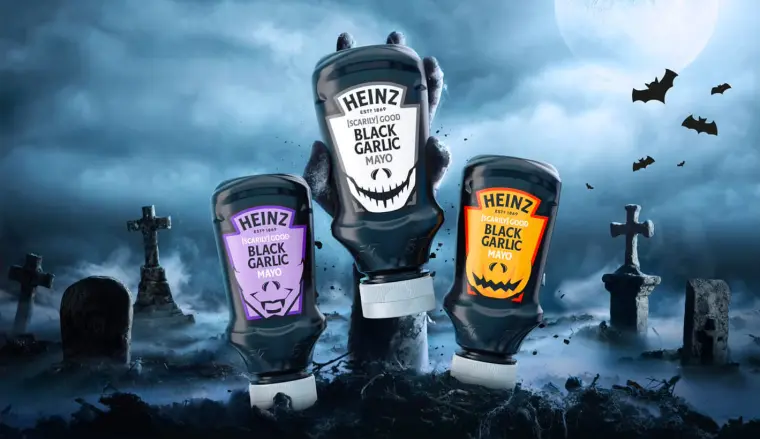
Jet-black mayonnaise.
Not pumpkin spice.
Not ghost packaging.
A visual shock product.
It taps into horror film color palettes, not cartoon Halloween.
It feels elevated, not gimmicky.
Example: Capri Sun — Trick vs Treat Pouches
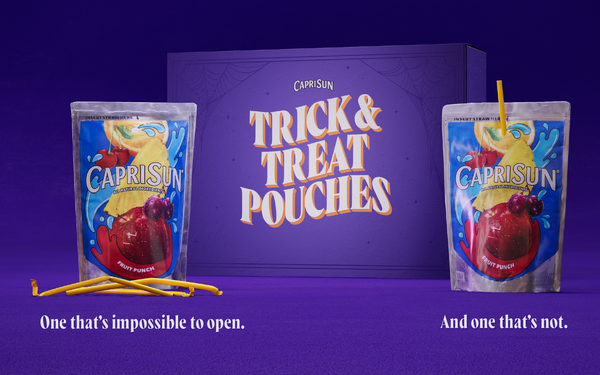
One pouch is normal.
One pouch cannot be punctured by a straw.
This is petty chaos packaged as consumer experience.
It is Halloween energy in product form.
So What Does This All Mean?
Halloween used to be “boo graphics” and pun captions.
Now it’s:
- Bold personality shifts
- Narrative experimentation
- Brand worldbuilding
- Elevated craft
And the cultural acceptance for it has never been stronger.
Halloween is now:
The annual brand permission slip for creative risk.
Not to trick anyone.
Not to be silly for the sake of it.
But to show dimension.
To show tone.
To show voice.
To show identity.
Because the brands winning today aren’t the safest.
They’re the most distinct.
And Halloween has become the stage where they prove it.

Amanda Clark
Amanda Clark has been navigating the wild world of marketing for over 15 years, turning small businesses into local legends, big corporations into household names, and political candidates into the talk of the town. With a digital marketing toolkit that's practically bursting at the seams, Amanda knows exactly what clicks and what crashes. When she's not busy crafting campaigns, you can find her dissecting the latest marketing trends with a cup of coffee in hand—or disconnecting from technology for a walk on the beach.